Saturday, February 25, 2012

The Coldest Night

I'm here to tell you - to save your reading life! - about an outstanding upcoming novel by Robert Olmstead (Coal Black Horse, Far Bright Star) that you will almost certainly overlook when you see it sitting on a table in your local bookstore. I mean, look at that shitty cover. Who in their right mind would ever see that and go, "Huh. That looks like a gritty parable about a man trapped between Heaven and Hell. I bet that's filled with tons of Korean War violence and horror, followed by a heartbreaking attempt to return to the perceived comforts of home. I'll take it."

It looks like a Nicholas Sparks knockoff or an original Lifetime romance movie ad.

I say that with as much respect for Olmstead and his publisher as I can - honestly. Algonquin Books publishes some superb fiction and are extremely generous to and supportive of the indie community. (Algonquin books: West of Here, Water for Elephants, Silver Sparrow.) So enough about the cover.

The Coldest Night is laid out like a three-act play: Henry Childs is a 17-year old poor Southern boy in 1950 when he meets Mercy, from the more-refined country club crowd. They fall, predictably, utterly in love with each other ("I only wish I could have met you better in life," Henry said. "Better than what?" she asked.) and feeling the looming threat of Mercy's disapproving family, they run away to New Orleans to start a new life together. Life is blissfully perfect, until Mercy's brother tracks them down, humiliates and beats Henry, and drags Mercy back home.

Act Two finds Henry in the Korean War - and this is where Olmstead hits his narrative stride. As soft and tender as Act One might have been - clearly the set-up for that awful cover art - part two is gritty, violent, terrifying, and dark, reading much more like a Blood Meridian or a Matterhorn than A Walk to Remember

An unraveled sheath of muscle sprawled from a torn pant leg. Red-hot fragments driven deeply into a man's body and his legs were shattered. A fist-sized hole. The men did not look human after war's subtractions: no eye, no ear, no nose, no face, no arm, no leg, no gut, no bowel, no bone, no spine, no muscle, no nerve, no breath, no heart, no brain, no faith.
Olmstead's writing is so sparse and stark - so "Cormacmcarthian," to coin a bad, new phrase - he leaves much of Henry's emotional development to the reader's imagination. We are allowed to fill in the emotional gaps left in Henry's wake - never are we hit with heart-to-heart talks between soldiers or revealing inner monologues. War Is Hell and Henry's detachment is painfully obvious on every page.  By never stating the obvious (through said inner thoughts by the protagonist and rote dialogue) the whole things seems to carry more weight, more gravity. Henry's animalistic, instinctive fight for survival on the frigid, snow-swept landscape of the Korean peninsula eventually defines him as a human, strangely enough, despite the fact that he manages to lose a grip on his actual humanity in the process. Like I said, much of the deep thinking is left to the reader, which is really where the brilliance of this novel lies.

Robert Olmstead
*Sidenote: I'll admit to not knowing a damn thing about the Korean War - the one between the other two - and it seemed pretty freakin' awful, based on this fictional account. Henry & his friend, Lew are freezing and severely out-manned for much of Part 2, dodging the endless streams of Chinese soldiers advancing on American positions by moonlight across the frigid snowscape. Scary shit, especially because it's real AND I know nothing about it. 

When Henry finally returns to the US, he is, of course, just a shell of the man he once was. The truly painful part of this is that Henry is barely a man - he was just 17 when he left for the war and a mere year has gone by since. Eighteen years old and already his eyes have seen more than anyone should ever be asked to see. So, understandably, he has a hard time adjusting to American life in the 1950's. He drifts, he drinks, he sleeps outside from time to time. At every turn, he feels the world rejecting him - like a puzzle piece trying to fit into the wrong puzzle. Eventually, as you know that he would, he makes his way back to Mercy, leading him to a stunning conclusion about his life path - made all the more astounding given his extreme youth. 

I may be wrong in making this conclusion, but... I read The Coldest Night as a parable about Heaven, Hell, and whatever lies between. Act One is Heaven for Henry - he's comfortable, young, in love. Life is as close to perfect as he has ever known. Act Two is undeniably Hell for him. Death, violence, cold, (I've always believed that the inner circle of Hell will be frozen, as in Dante's vision) and fear surround him at every turn. Act Three is a middle ground of sorts - Henry is lost in this Purgatory, not belonging to either world, but needing to make a choice in the end, of which ending is to be his own.
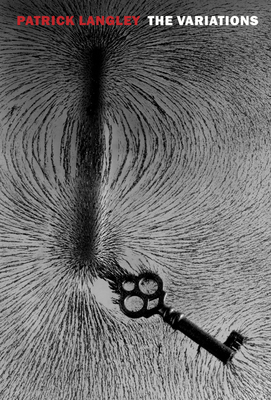
It may not be a Nicholas Sparks novel, as the cover art may suggest, but The Coldest Night is a fucking heartbreaker, let me tell you. It packs a wallop, no doubt - emotionally, philosophically - and it left me stunned, sad, and in utter awe of a writer who may just finally get his due. Robert Olmstead, I bow down before you, sir.

Sunday, February 19, 2012

The Fantastic Flying Books of Mr. Morris Lessmore

I really have nothing to say about this - other than "shut up and watch." (A 2012 Oscar nominee for Best Short Film - Animated.)

Monday, January 16, 2012

The Orphan Master's Son by Adam Johnson

Citizens, gather 'round your loudspeakers, for we bring important updates! In your kitchens, in your offices, on your factory floors - wherever your loudspeaker is located, turn up the volume!

I don't know if the timing on the release of The Orphan Master's Son (January 10) is positive or negative in light of the recent death of North Korean leader, Kim Jong-il. Are we sick of hearing about the Dear Leader at this point, after being inundated for weeks from every news source in the Western hemisphere? Has the world moved on, ready to see what madness "Brilliant Comrade" Kim Jong-un will unleash?

I say, embrace the crazy of the DPRK's pater familias, at least for a little while longer - as Adam Johnson highlights in his new novel, you have no idea how bad it really is.

Johnson has said (in an interview with Richard Powers) that he set out, originally, writing a humorous short story about Kim Jong-il and his reported shenanigans in North Korea. (Tentatively titled, "The Best North Korean Short Story of 2005.") While researching for this "'official' short story of North Korea," he began reading testimonials from gulag survivors and defectors that forced him to change his tack.
As I read defectors' oral histories, each one of them more heartbreaking than the last, a sense of duty filled me. I abandoned all the true-but-loony material about the Dear Leader, which though real, made the work too farcical; instead, I decided to tell the story of a single average citizen who came of age during the famine.
The resultant novel is by no means farcical - or humorous, or hilarious, or comedic. It exposes North Korea to be all that we Westerners worry about - a fear state run by an egomaniacal madman with no system of checks and balances in place. It is merely a playground for the Dear Leader wherein everyone needs to play by his rules, around the clock, for fear of being sent to a prison camp or sentenced to death for speaking out of turn or failing to perform the expected duties of a proud citizen.

Raised in the Long Tomorrows orphanage, Pak Jun Do believes himself to be the son of the Orphan Master, rather than a common castoff - why else would he be singled out for extra punishments all his life? (This is just the first of many ingenious, subtle falsities within that twist and re-form the storyline in the hands of its characters.) In the wake of a massive national famine, Jun Do joins the army at age 14, becoming a tunnel soldier in the ongoing battle with the South over the DMZ. After 8 years of this, he is brought out of the darkness & conscripted to perform clandestine kidnappings of Japanese citizens for the State. Then, just as mysteriously, the kidnappings come to an end, Jun Do is taught English, and he is sent out to sea on a fishing boat where he listens to intercepted American radio transmissions. 

It's best not to question the workings of the North Korean state, so just go with the flow here.

From there, Jun Do is sent to Texas, of all places, as part of a mysterious diplomatic mission - which goes horribly, predictably wrong, mostly due to the duplicitous nature of the Korean delegation, such as they are. Regardless, for his part in the failed mission, Jun Do is sent to languish in a prison mine for the rest of his days. It is at this point that the narration gets tilted on its axis and becomes something else entirely. 

Believe it or not, this describes merely the first third of The Orphan Master's Son - a sprawling, multi-layered exposé of life behind the walls of one of the world's most guarded nations. Wait, there's more. At some point, while in prison, Jun Do assumes the identity of one Commander Ga - a revered national hero & a fearsome rival to Kim Jong-il himself.
"He was the winner of the Golden Belt in taekwondo. They said he rid the military of homosexuals."
As Commander Ga, Jun Do's story becomes a fiction within the fiction - one of false identities, deceits, and negotiating the labyrinthine corridors of Kim Jong-il's government. Jun manages to escape prison as Ga - and even though no one truly believes that he is actually the Commander, he inserts himself into Ga's life, moving in with his famous actress wife, Sun Moon (whom Jun Do has another connection to) and living Ga's life as if it were his own. This is all about survival, in the end, whether for himself or for those he cares for - the goal, all along, is to depart from the horrors of his homeland, one way or another. In one of the more ingenious narrative twists, in between the unfurling of "Ga's" story, we are given State propaganda broadcasts which counter & romanticize what we know has actually occurred. A fiction within the fiction, as it were - lies told about the liar.

As complicated as this all sounds, Johnson eases you into every element of it - laying every evolution out as plainly as he can, almost as a natural progression. Of course Jun Do is sent to Texas - why not? Of course he can assume the identity of a man whose face is known to every citizen in the whole country - why not? Jun Do himself evolves from innocent bystander in his own life to a major player on a national scale, bringing us along with him. And while Kim Jong-il is certainly the wizard pulling levers behind the curtain and his presence is felt behind every conversation and every decision made, the story is never specifically about him. Johnson successfully avoids falling into the satirical trap, focusing on what life in a fear state run by a puppet master madman must truly be like. Eventually, Kim is exposed as the fallible, short-sighted, lunatic dictator that we know him to be, opening a brief window for Jun Do. Even so, at its heart the novel is really all about the people who suffer in the wake of Kim's crazy - the citizens who live in fear under his iron hand, never even daring to try for a better life away from North Korea.

In the end, through simple storytelling on Adam Johnson's part, we are no longer jaded, Western observers of CNN reports on political maneuverings - we have witnessed (albeit in a fictional form) what life is like for the citizens of today's North Korea. And it ain't good. But there is always hope - and that hope is what drives this remarkable story along.

Monday, January 09, 2012

The Mirage by Matt Ruff

History is, of course, all about perspective. Our own personal perspective, sure, but also our collective ethnocentric perspective. Author Matt Ruff has managed to flip all that we think we know about the last decade of world history on its collective ass in his new novel, The Mirage.

First, here's a little history: the United Arab States (UAS) was formed after 13 independent states around the Arab Peninsula broke away from the Ottoman Empire in the late-19th century. While Europe went to war in the early-20th century, the UAS quietly grew into an industrial giant with the discovery of local petroleum reserves. When North African Muslims were threatened by Germany in 1941, the UAS declared war on the Axis countries, liberating 5 African states to join the union in the process. In 1944, the UAS invaded France's southern coast, leading the Allied forces to victory. (Adolf Hitler was beheaded at Nuremberg in 1946.) 

Over the ensuing decades, the UAS grew into a world superpower, expanding to 22 states & experiencing wealth and prosperity. On November 9, 2001, everything changed. Two airplanes hijacked by Christian fundamentalists from America crashed into the Tigris and Euphrates World Trade Towers in downtown Baghdad, killing thousands of people. A third plane was crashed into the Arab Defense Ministry headquarters in Riyadh. After a white supremacist group from the Rocky Mountain Territories in North America laid claim to the attacks, the UAS invaded Denver, sparking a decade-long War on Terror.

As you can see, much of this world is familiar, with significant twists. America is a third world backwater, filled with loose alliances, broken states, and fundamentalist militias. Osama bin Laden is a hero from the Afghan war with Orthodox Russia and a senator from Arabia. Saddam Hussein is a thug and an organized crime boss from Baghdad. The state of Israel is in what was northern Germany & occupies the West Bank of the Rhine. Lyndon B. Johnson was president of the Christian States of America (CSA) from 1963-2003. Louisiana was liberated by UAS troops in the Mexican Gulf War. You get the idea. 

The real twist to this - yes, these are not the twists, in fact - is that in the present day, Arab Homeland Security has captured an American who claims that the whole world is just a mirage and that in the real world, everything is reversed. In the man's apartment, agents find a copy of the long-defunct New York Times dated September 12, 2001 that appears to refute his claims. As it turns out, AHS has other objects of interest in their possession: an American flag with a field of white stars instead of the familiar golden cross, a map of the Middle East with Israel instead of Palestine & Iran instead of Persia, and a French newspaper with similar headlines to the Times one. But what does this all mean?
"This mirage you speak of, it's God's doing?"
Costello nodded. "'The last shall be first, and the first last...' God's turned the world upside down."
"And why would He do that?"
"To punish us."
"The Americans?"
"Yes."
"For what sin?"
"Pride," Costello said.
Despite the phenomenally clever and original premise, The Mirage does have its faults. The cast of Arab Homeland Security agents and detective-types fall a little flat in the personality department and, while necessary for that all-important perspective, the familiar name dropping gets a little tedious. Dick Cheney, George Bush, Saddam, Osama, Kissinger, LBJ, even David Koresh. Law & Order: Halal, CSI: Damascus. Yeah, yeah, yeah. But stylistically it reads like a mass market thriller, which I think is the author's intention - with the notable exception that the entire plot premise gives the reader pause. Even with all the hokey faux-cultural references, The Mirage makes you think - it challenges our preconceptions about the inner workings of our world in a way that fiction rarely does. Rather than just being an out-of-the-box Tom Clancy novel, we are challenged to reflect on our world - and America's place in it - a little differently.

We live under the assumption that things are the way they are because that's just how it is - but Ruff proves that with just a slight tweaking, our world could be a very different place. In the case of his created universe, the perspective is only shifted to a different hemisphere - the world is very much the same, just from a different vantage point, but with huge ramifications. And like I said, history is all about perspective.

Saturday, December 31, 2011

New Year, New Look

Same old Catapult.
I'm currently fiddling with the Book Catapult's look, so bear with me. It seems that black is no longer "the new black," so I thought I'd switch it up.

If you're looking at this through the crap-caked glasses of Internet Explorer, things may not look so hot. Sorry.

Happy New Year!

Thursday, December 29, 2011

2011 Catapult Notable List - #1

Cover of the year, to boot.
#1: We, the Drowned by Carsten Jensen
I read several outstanding books in 2011 - any one of the top three could have made it to the top spot at one point or another. This was an unusual year in that there was never a 100%, clear-cut Best with a capital B book for the year. Every year that I've ranked my reads like this, I've known way in advance what the #1 book was going to be. This time, for awhile I knew who was in the top 5, but not the order they would ultimately fall in. But there was just something extra in Carsten Jensen's sprawling, seafaring Danish epic that solidified its position in the top slot this year.


Spanning the years and generations from 1848 to 1945, We, the Drowned follows the sailors of Marstal – a tiny town on the island of Ærø in the Danish archipelago – as they travel the oceans of the world as adventurers, soldiers, sailors, fathers, & sons. As each narrative voice moves on, another from their life picks up the tale & makes it their own. When on dry land, the people of Marstal tell the story in a collective “we” – a narrative device that Jensen wields with majestic clarity & grace. Funny & poignant, heartwarming & powerful, yet dark & foreboding in a way that only the events of our own world can actually be. 

I know that I'm partial to novels of the sea, or involving whales, or wooden ships, but there's so much more to We than that. The flow of the narrative from the collective to each of the individual narrators is seamless, lyrical, and beautifully wrought throughout. The characters are unusual and original, yet wholly familiar - I reached a comfort level in their presence like I would with an old friend. We always carry our own lives & experiences around with us when we read, so maybe certain themes were more resonant for me than for others, but that's the brilliant thing about this - so much of the story is also about those left behind in the wake of the departing ships that you could read the same book and come away with a different feel for what it truly was about. As much as it is about the adventures of Laurids, Albert, and Knud Erik, it is about Klara, Herman, and the all the rest of the people of Marstal. After living amongst them for weeks, I felt as if these people of Marstal had become a part of my own life, my own history.
And in the end, even after nearly 700 pages, I was still blown away by the final, heart-rending page as the living and the dead of Marstal all returned to the shores of Ã†rø. "Tonight we danced with the drowned. And they were us." A fantastic, gorgeous novel - both inside & out - and one of the best books I have ever read. 
----------------------------------
2011 Catapult Notable #2 
2011 Catapult Notable #3 
2011 Catapult Notable #4 
2011 Catapult Notable #5 
2011 Catapult Notable #6 
2011 Catapult Notable #7 
2011 Catapult Notable #8 
2011 Catapult Notable #9 
2011 Catapult Notable #10 
2011 Catapult Notable Notables 

Wednesday, December 28, 2011

2011 Catapult Notable List - #2

#2: West of Here by Jonathan Evison
Now we're really getting down to it. Real top tier stuff.

I read and wrote a long review of West of Here almost a year ago - right here - but even still, the characters and the town of Port Bonita have stuck solidly with me over all that time. Truly the mark of brilliance. Here's a little blurby-blurb I wrote awhile back, a slightly different version of which also ran in the San Diego Union-Trib at some point:
The sprawling narrative of Evison's brilliant novel never leaves the tiny river town of Port Bonita on Washington State’s Pacific coast, but the collection of voices he utilizes offers a resounding portrayal of how closely all of our lives connect & intersect, even across generations & hundreds of years. In 1890, Port Bonita is just getting started, as Washington is perched on the cusp of statehood & the untapped wilderness calls to the region's transplanted residents. However, the PB of 2006 is standing on her last legs, a victim of the very model of industry that created the town in the first place. Evison skillfully & beautifully weaves together these vignettes (often riotously funny) of the lives of PB’s residents, bringing a wide variety of voices together in a chorus of humanity, ultimately showing us how thin the veils between generations really are. I loved every word. Onward!
WoH is sort of a staggeringly vast piece of fiction, filled with dozens of fully-formed characters with story arcs that twist and weave in and amongst each other over the course of generations and decades. The residents of 1890 PB are (for the most part) filled with vim & vigor - hopeful and ready for the future on the horizon for their frontier town. Their descendants in 2006 are... well, dealing with the rash decisions made back in the day. As it turns out, the technological masterpiece of a dam that put them on the map in the previous century has proven to be more problematic for the long-term life of the town than the founders originally thought. (As is, your all-important salmon canning industry kinda hinges on the fish being able to swim up the river.) This dichotomy between generational perspectives - seeing how much things didn't actually pan out - is really the crux of the appeal of WoH. It's all about the thread of connection we share with our predecessors - all the tiny, seemingly insignificant filaments of life history that bind us together across the years. 
Plus it's really funny. (Maybe it's because I'm writing this around Christmas, which is nog-season, but the Franklin Bell character, who drinks eggnog all-year round, kills me. He's also based much of his life philosophy around the songs of Don Henley. I mean, c'mon.)

It's a big, fat book, too - in the neighborhood of 500 pages - but I implore you to not be scared off by the girth. Like I said, much of it is funny as all hell and Evison manages balance things nicely with a subtly wide scope that envelops a large swath of humanity within its pages. All of these vignettes of PB's residents - a cacophonous chorus of voices - are brilliantly woven together into a stunning tale of humanity at both its absolute worst and its heart-rendering best. The veil that separates generations proves to be rather thin, even porous, when you step back with a little historical perspective. And hell, isn't that what we all hope for?

Tuesday, December 27, 2011

2011 Catapult Notable List - #3

#3: The Tiger's Wife by Téa Obreht
I moved this one up and down this list, for some reason, before finally settling on the fact that I was blown out of my shorts by it when I read it. This is another case (like Rules of Civility) where I need to forget about the whiny complaints of others and just go with my gut - and my gut tells me that Téa Obreht is one hell of a writer. Listen to the fawning praise I heaped upon her in March:
Foreign, yet familiar, impossible, yet true, unsentimental, yet emotional - the elements that she has managed to cull together here are melded absolutely perfectly. A stunning, stunning debut, and one that will stick in your head for long after you've turned that final page...
I stand by that lofty assessment.

The summary, such as it is: Natalia is on a diplomatic mission across the border of her war torn Balkan homeland to deliver vaccines to an orphanage, when she learns of the death of her beloved grandfather in a remote village far from his home. Knowing that he was gravely ill & never would never have traveled without a real reason, she becomes convinced that he was in search of "the deathless man" - a longstanding, mysterious figure from the stories he told her as a child. As Natalia sets out to uncover the mystery of her grandfather's final days, she learns more about herself, her family's past, and her country than she ever thought possible and finds that all the answers she seeks lie within the stories of her grandfather.

Obreht's mixing of timelines, folklore storytelling, and mythology within the landscape of a war-ravaged, modern setting really does the trick. I was, and continue to be bowled over by the fact that she wrote this when she was just 24 years old. (She's another of the New Yorker '20 Under 40' that I can't shut up about.) The stories that live within her - released into this novel - seem to be ageless or timeless. The "deathless man" could be a story told 500 years ago, or a thousand years ago, yet, someone could have told it to me yesterday & I would have believed every word. Just take it slow, enjoy it for what it is, and give it to a friend when you're done. Destined to be a modern classic.

Monday, December 26, 2011

2011 Catapult Notable List - #4

#4: Crimes in Southern Indiana by Frank Bill
This debut collection of short stories hit me like ten tons of bricks when I read it. Ten thousand tons. I found it impossible to shake Frank's raw, gritty stylings of rural Indiana, no matter how badly I wanted to tear myself away and step back into the light. Seriously, after each of the first, maybe, 5 stories, I tried to put the book down - hell, just to stretch my legs & feel some sun on my face - but I was grabbed and yanked and coerced and forced back into the pages of the book. Each story is like a squared-up punch right in the face - like the guy sets his feet, his friend holds your arms down and your head steady, and he unloads his big hamfist with all 230 pounds of himself behind it right into your teeth. So I kept reading.

I've been going back over a lot of these stories for this post & I've just been struck - again - by the insane power of the opening lines from every single one of these. Check some of this action out:
Pitchfork and Darnel burst through the scuffed motel door like two barrels of buckshot. Using the daisy-patterned bed to divide the dealers from the buyers, Pitchfork buried a .45 caliber Colt in Karl's peat moss unibrow with his right hand. (from "Hill Clan Cross")
J.W. Duke was choking down his fifth cup of kettle coffee, nursing a hangover, when his wife, Margaret, came through the kitchen door, screaming as if her skin had been pressed through a cheese grater. (from "A Coon Hunter's Noir")
It was too damn early for this shit, Officer Moon Flisport Conservation told himself as he steered his Expedition down the country road, sweating bourbon through his pores. His heart was pounding in his skull, ready to explode across the front windshield because of the Knob Creek he'd torn into last night after his wife, Ina, had called him a racist. (from "Officer Down (Tweakers)")
These are openers, friend, designed to lure you in with their dulcet tones and sense of intrigue. What they are really telling you is to stay the hell away from these people. Ah, but you can't, can you? For deep down, they are you and me... 

Frank's writing really reminds me a lot of James Crumley's in The Last Good Kiss and Denis Johnson's stories in Jesus' Son - all are populated with the scabby, tweaked-out dwellers of America's nasty underbelly who use every ounce of their strength to do horrible shit to one another for a variety of inexplicable causes. I can't think of another writer out there today that I'm more excited to see more from than Frank Bill. This guy's the real deal, a stone-cold badass writer with more skill & chops than you know what to do with. Rock on.

Sunday, December 25, 2011

2011 Catapult Notable List - #5

#5: Jamrach's Menagerie by Carol Birch

I definitely first noticed Jamrach's Menagerie because of its cover art (top), but thought the UK versions were equally solid, so I'm including their likenesses here as well. The nice part about this book is that the insides are actually better than the jacket art!
I was born twice. First in a wooden room that jutted out over the black water of the Thames, and then again eight years later in the Highway, when the tiger took me in his mouth and everything truly began.
Set in Victorian England, this is the bizarre tale of Jaffy Brown, born in the darkest, dirtiest slum of Bermondsey, London. After being nearly eaten by a tiger on the street one day - a perfectly natural situation - he is taken in as hired help by the tiger's owner, Mr. Charles Jamrach. Jamrach is a "Naturalist and Importer of Animals, Birds, and Shells" who brings exotic beasts from all corners of the world, houses them in a vast menagerie at his house in London, and sells them to wealthy Brits. After proving his value to Jamrach, Jaffy finds himself off on an ocean voyage with his best friend Tim Linver and Jamrach's "finder," Dan Rymer, in search of a reported dragon in the Java Sea. What they find sends them all on a much different kind of journey - one laced with insanity, unreliable narration, thirst, starvation, and the dark turns in the inner workings of the souls of men. It's this latter part, of course, that I really loved. When your narrator is going insane from hunger and thirst, floating in a life raft hundreds of miles from everywhere... that's when I tune in. What's the fun in having a narrator who you can completely trust? You gotta embrace the crazy.

At turns this is a playful, whimsical story - light and filled with the magical awe experienced through the innocence of childhood - but Birch tosses in just enough Heart of Darkness for that third act, transforming it into a truly brilliant, wholly original book that I loved every word of. (Also shortlisted for the 2011 Man Booker Prize, so it's not just me.)

Saturday, December 24, 2011

2011 Catapult Notable List - #6

This cover is a rare case where Canada is better.
#6: Galore by Michael Crummey
And so the fish book section of the list begins... The full Catapult review can be seen here. For whatever reason, Michael Crummey's weird little book about a community of Newfies and an albino dude cut out of the belly of a whale has somehow stayed completely off the radar of everyone else in the U.S. this year. Your loss, America!

I tried to come up with a good, new review for Galore's inclusion on this list, but I have to admit, I can't put it better than I did earlier. So...

Galore is filled with weird little vignettes imbued with a magical spark and a folkloric vibrancy that sucks the reader into its undertow and deposits them for the duration amongst the bizarre folk who populate Paradise Deep, Newfoundland. Mummers storm your house every Christmas, the ghost of an awful husband is condemned to watch his wife with another man, a woman has all her teeth pulled out so that they never rot, unrequited loves abound across the generations. The family Devine and the family Sellers are the integral cogs in the machinations here, driving the story forward with their slights, feuds, disagreements, illicit love affairs, snubs, fistfights, and secret children. Inextricably linked together, they are Paradise Deep, in the end, whether they like it or not. The story arcs over the course of 100 years or so in this tiny town, tracing familial lineages as they intersect and merge to create a beautifully complicated family tree. Always hovering amongst the branches of that tree is the mysterious Judah, pale, mute, and possibly ageless, yet infinitely more complicated, magical, and brilliant than anyone gives him credit for. He's the star of the show, the white whale always alluded to but never caught, as his significance manages to slip through our fingers until the last glimpse of him vanishes behind a wave in the final act.

Galore is one of those novels that manages to tell a broad-sweeping story through the eyes of a multitude of odd people - right in the Seth Marko wheelhouse. It's weird, it's funny, it's filled with dozens of characters, it's loaded with obscure history and strange Canadians. It has proven to be one of those books that has stuck in my craw for months - I can't seem to shake it. Did I mention the albino guy found - alive - in the belly of a beached whale? Yeah.

It's a really wonderful novel, I have to say, and it's a tragedy that more people have not noticed it. Yet. Thus, it is a solid #6 on the 2011 Catapult Notable list.

Friday, December 23, 2011

2011 Catapult Notable List - #7

#7: The Last Werewolf by Glen Duncan
Somehow, I almost overlooked Glen Duncan's werewolf novel for inclusion on this year's Catapult list, but after a little heartfelt soul searching... I remembered how phenomenally awesome it was from the first sentence to the last. Compiling this list can be tricky sometimes - it's hard to go back to the books you read in January, February, March and remember what it was about them that you loved so much back then. Sure, it helps to write things down in, say, a blog, but still. Do the books that you raved about in January stand up in the following December? In the case of The Last Werewolf, hell yeah.

By the way, Duncan is another author that I have met in person & I was struck by how werewolf-like he appeared. (see left) This doesn't have any bearing on this post, but I thought it was an interesting factoid. Please continue.

I've always thought that the genre of "werewolf fiction" was deserving of more attention. Okay, maybe I've never thought about it at all. Duncan's edgy, erudite prose provides a surprising literary spark to this pigeon-holed genre that we never consider. Jake Marlowe has walked the earth for the last 200 years, turning into a wolf with an amped-up libido upon every full moon. When we first meet him, he has just learned that the agents from the World Organization for the Control of Occult Phenomena (WOCOP) have - quite literally - detached the head of the only other of his kind left on the planet.
"It's official," Harley said. "They killed the Berliner two nights ago. You're the last." Then after a pause: "I'm sorry."
Jake is tired, generally. Tired of being alone, tired of fighting with vampires, tired of running from the goons who have hunted down all the other werewolves on earth. He's done everything we think we would do if given that much time. He's traveled everywhere, he's read all the books he wants, slept with thousands of prostitutes - One of the things I've been hanging on for is the death of my libido. I've lost interest in everything else, so why not? But it just keeps, as it were, coming. He's lived a life more full than any of us could reasonably imagine. Except, two centuries is a long time to keep on keepin' on just because that's what you do. Especially, to be honest, without any meaningful, lasting relationships.
I still have feelings but I'm sick of having them. Which is another feeling I'm sick of having. I just...I just don't want any more life.
So, he's come up with a solid plan to go out in a hail of silver bullets, taking his arch-nemesis from WOCOP with him, when events occur that turn his life philosophy, such as it is, on its lupine ear. I cannot stress enough how pleasantly surprised I was by Duncan's prose stylings. I know that sounds kind of shitty, but what sort of expectations could I have had, going into this? It really is an extraordinarily well-written novel - Jake's narration is so skillfully relayed that you never stop to question the validity of his crazy-sounding tale. Of course he's 200 years old! Of course he's a werewolf who kills and eats people! The infinite twists and turns within keep you guessing throughout - and thoroughly rooting for the wolf - and I can pretty much guarantee that you will not see the ending coming. All-in-all, rather than being just a trashy, sex-crazed horror novel, Werewolf is a brilliant tale of love, survival, prejudice, and the finer points of living a life well lived. Bravo.

Thursday, December 22, 2011

2011 Catapult Notable List - #8

#8: Rules of Civility by Amor Towles
Thanks to his publisher, Viking, I was lucky enough to have dinner with Amor Towles in Los Angeles (along with 8 or 9 other bookseller-types) back in March of this year. A rather charming fellow, this was his first real interaction with "the public" as a published author. He had never autographed his book for anyone on the planet before that dinner and although I wasn't the first (see photo), I was dangerously close - foiled by my...occasional friend, Julie. (Occasions when Julie is not my friend: when she gets to be the first-ever recipient of an author's signature. I'm just sayin' is all.) Needless to say, even without the dinner, Amor's book alone was easily good enough to vault him onto the Catapult list for this year.

Here's the full Catapult review that I posted back in August. And here's a stolen bit from that:
Rules is a novel about a year in the life - 1938 to be precise - of young Katey Kontent, 25-year-old New York City secretary, struggling with identity and her place in the world. At a New Year's Eve party, Katey and her friend Eve meet Tinker Grey, a handsome, high-society-type gadabout straight out of an F. Scott Fitzgerald piece. Tinker's friendship opens new doors for Katey and she floats through the upper echelons of NY society with ease, although always as more of a voyeur than an active participant. Without a trace of contrivance, Towles completely brings 1930's NYC to life - the clothes, the restaurants, the bars, the dialogue, the smoking, drinking, dancing - everything, top to bottom. (It's a little bit Mad Men for the 30's.) To me, that's what Rules is all about - it's a view into a lost world of American life. Sure, 1938 proves to be a life changing year for little Katey Kontent, but Towles' creation of the era is what has stuck with me as something special.
The "problem" with being around books and booksellers and other readers all day long is that opinions get spread around like swine flu, often leaching into your own head if you listen to them enough. I loved this book while I was reading it and loved it after I finished. But after talking with other readers, reading other books in the months after, my opinion shifted around towards general apathy, I suppose. Well, maybe not complete apathy - I still liked the book, but I thought I could see its flaws more clearly, or something like that. Now, after reflecting a bit for this list, I realize that the flaws - such as they are - don't really matter. Nor are they so prevalent as to be problematic. A common complaint I've heard and read is that "nothing happens" to Katey over the course of the novel. To that I say, "Who cares?" This is a novel about a year in her life - plenty happens to her, but there's just no over-arching trauma or personal revelation. I read it as a chance to escape into the 1930's for awhile - Towles' evocation of the era is astounding - and that's how I would suggest you approach it yourself. Don't look for the answers to all of life's big questions, just enjoy it for what it is - #8 on our countdown.

Wednesday, December 21, 2011

The Open Road with Ken Bruen

I found this via Publisher's Weekly this morning - Open Road is a "digital publisher and multimedia content company" that markets ebooks through original video content and social media. While I'm not a ebook-er, as you know, the documentary film content they offer is pretty fab. This one's a 2-minute piece on Catapult favorite, Ken Bruen:

2011 Catapult Notable List - #9

#9: Robopocalypse by Daniel H. Wilson
For a guy who claims to not read science fiction anymore, I always seem to have at least one title on my year end Notable list. The Brief History of the Dead (2006), The Yiddish Policemen's Union (2007), The Gone-Away World (2008), Super Sad True Love Story (2010). And now this - the Robopocalypse is upon us.

Daniel Wilson's novel is definitely sci-fi, make no mistake, but please don't let that deter you like some book-snobby jerk. Reading this thing is like stepping in front of a subway train & getting pushed down the tunnel for an hour before you're tossed aside in the grass on the other side. You're bloody and covered with soot and garbage, but you're alive, man. I wrote a full review back in May, but here's a rundown:


In a near future of ours where humanity has mastered the art of robotic machinery - from the smart chips in our cars to simple, scurrying Death Star droids and domestic bipedal robots, there are engineered helpers all around us. In the presumed safety of a secure lab, one scientist finally creates the ultimate thinking machine, Archos, whose intelligence reaches unchartable levels in just 15 minutes of existence. Much to the fatal dismay of its physicist/father, Archos quickly figures a way out of its secure environment and starts in motion its plan to logically erase humanity from the planet. By Archos' calculations, humans were put on earth to create our evolutionary successors and once we have done that, we may be dismissed. Archos, of course, considers itself that  successor, which means that some bad shit is coming down the pike toward us. 

Archos, now plugged in and in a secure location, quickly begins to spread its message of world domination to all the electronic devices around the world capable of being manipulated. At first, isolated incidents are reported: a nonviolent, "humanoid safety and pacification robot" stationed in Afghanistan starts killing people; a domestic bipedal robot rips the face off a Frogurt employee; a "Baby-Comes-Alive" doll does just that, spouting robot propaganda at a Senator's daughter; the onboard computers of two domestic airliners chart a collision course before being overridden at the last second. Then all hell breaks loose. It's mostly the cars - any automobile with an "intra-vehicle communication chip" either runs humans down on the street or drives the ones on board to their deaths. Imagine the chaos in the cities...  Bipedal robots go door-to-door, "removing" human occupants - definitely not safe to stay inside. So what do you do?! After much death and madness, humanity regroups a bit, in the first incidence of true global solidarity, and tries to salvage what's left of our societies in an attempt to stop whatever the hell is happening to our world. 

That battle - to rescue humanity from the clutches of the mad, near-omniscient robot we created - is what Robopocalypse is all about. Easily hitting the #9 spot on our countdown. (PS: Spielberg is hard at work on the film, on your screens in July 2013.)

Tuesday, December 20, 2011

2011 Catapult Notable List - #10

#10: Swamplandia! by Karen Russell
Starting off the 2011 Catapult Notable list is a late add, a squeaker that came in through the back door when everyone's backs were turned: Karen Russell's first novel, Swamplandia! Russell isn't really a newbie - she received substantial acclaim for her 2006 story collection, St. Lucy’s Home for Girls Raised by Wolves and was named one of the vaunted New Yorker "20 Under 40" last year - which is, of course, how she really ended up on my personal radar. This book proves her mettle, friend.

Swamplandia! is one of those quirky, funny, sad, bizarrely poignant books that lingers and lingers and lingers... long after you've put it back on the shelf. A good half to 3/4 of it is narrated by a 13-year old girl - often a red flag, but the voice is delivered here with such a stunning clarity and honesty that I hardly noticed her age. Emma Donoghue put it well in her NYT review: "Her first-person narration is not a transcription of a 13-year-old voice, but an evocation, in adult language, of a barely adolescent mind-set." 

Ava Bigtree and her family own and operate an alligator-wrestling theme park on their island in the swamps of the Florida Everglades. At one time, Swamplandia! was billed as "The Number One Gator-Themed Park and Swamp Cafe in the area," I'll have you know. Russell had me with the first line, "Our mother performed in starlight," but solidified it further a couple pages later: 
We leased an expensive billboard on the interstate, just south of Cape Coral: COME SEE "SETH," FANGSOME SEA SERPENT AND ANCIENT LIZARD OF DEATH!!! We called all our alligators Seth. ("Tradition is as important, kids," Chief Bigtree liked to say, "as promotional materials are expensive.")
How could I stop reading a book featuring 98 alligators named Seth? Ava's mother, Hilola, the park's headlining, high-diving, gator-pit-swimming star attraction, has just died, leaving Ava, her 2 siblings, and their father alone on Swamplandia! The island is only accessible via ferry and once the headliner is gone, the tourists stop coming to spend their vacation money. (Rather, they hit the new apocalypse-themed "World of Darkness" park on the mainland.) Within a few months, operations have been suspended on the island and Ava's brother, Kiwi has left to try to make some money on the mainland. Her father, who has dubbed himself "Chief" Bigtree, on account of a falsified familial, Native American heritage, heads to the mainland on "a jaunt" to take care of some urgent business (involving something he calls "Carnival Darwinism"), leaving Ava and her sister Osceola, alone with the Seths. Ossie has taken up communing with the spirit world via her Ouija board and claims to have fallen in love with the ghost of a turn of the century "dredgeman" named Louis Thanksgiving. Okay, no problem. Until Ossie steals off to elope with Louis, somewhere out in the swamps, leaving Ava completely alone. Convinced that Ossie is making her way to the entrance to the underworld, where, naturally, she and Louis can be together, Ava enlists the help of the odd, crow-wrangling swamp-gypsy, the Bird Man, to help track Ossie down. 

So, you know, it's just your typical, run-of-the-mill American family tale.

Like I mentioned earlier, Ava's spot-on narration is what drives the story. All throughout, I took the world she was relating to me at face value - somehow, Russell was able to convince me to put aside any adult thoughts about the situation Ava was in and just accept what was happening as being truthfully transcribed by this 13-year-old girl. (Who has never left her alligator island for more than 24 hours.) So when reality sets in and the magic wears off, Ava reverts to being a scared teenager who is out in the middle of nowhere with a dude in a bird cape. But in the end, as odd as they all are, it is the strength of the Bigtree family that prevails - despite inevitable tragedies, life goes on as long as your family is there to shoulder the burden along with you.

Monday, December 19, 2011

The Catapult Notable List 2011

Well, here we are again - it's list-makin' time. Self-indulgent list-makin' time. As you know from previous years - this being the 6th annual Catapult Notable List - my "best books" list isn't like a lot of the other standard lists you see out there. Sure, I share a few favorites with the New York Times' 10 Best, a couple with Publishers Weekly's Fiction list (and none! with their overall "best" list), and even a few on Amazon's list. And hey, check out the Guardian's crazed list - this is what happens when you let the authors pick their favorites. Wha? Huh?

But my Top 10 are drawn from the 43 books I chose to read in their entirety during this past year (there were 7 others that I read significant, 100+ page chunks of but never finished) so there's quite a bit of subjectivity to it. AND, I will have you know - six of the books I read this year were written by women. Go ahead, ride me for not reading enough, but if you recall, the tally for 2010 was a big fat zero. This is progress, everybody, so lay off!

The only other real qualification is that all potential Notables were published in 2011 - which unfortunately leaves Bruce Machart (The Wake of Forgiveness) and Scott Huler (On the Grid) off in the wings. (Sorry fellas, loved 'em both, but rules is rules.)

I was down from 47 reads in 2010, and over 50 in 2009. Not sure what that means, other than I'm stupider, busier, or lazier, perhaps. Despite the lower number there, I agonized over this list this year. I shuffled the Top 10 more times than I can count, some books got cut, others moved into the top tier, but after the dust settled, I'm pretty sure that the final list is absolutely correct. Before you get too excited, know that there are no books by Jeffrey Eugenides or Haruki Murakami on the list. Ken Bruen (Headstone), Philip Kerr (Field Gray), David Bezmozgis (The Free World), and George R. R. Martin (Dance with Dragons) were good, but just not quite good enough to make the list. But before the Top 10 commences tomorrow - and unfolds in incredibly dramatic suspense over the following 10 days - here are the best of the rest. The also-rans. Those that just missed the cut. The Notable Notables for 2011, in no particular order:

This is one that just - and I mean just - missed making the Top 10. I debated this right up until the last, self-imposed second, but the book that beat Chad out was just slightly better. I suppose that in the literary canon of baseball novels, this will ultimately rank up there with Malmud's The Natural and Kinsella's Shoeless Joe. However, as for the rest of the book, there wasn't anything particularly stunning about Harbach's prose that made me really sit up and take notice. It sort of putters along, laying out the unfolding drama of this young man's life, populating the world with some half-formed characters (Pella, Schwartz) and some other wonderfully fully-formed ones (Guert), and ultimately leaving us with a very good story, but not a life-changer. To me, at least. Every other critic in America seems bowled over by it, but on the whole, I think it left me a little flat.

Scandinavia's best crime novelist, in my not-so-humble opinion. Jo has firmly wrestled the mantle away from Henning Mankell with this fantastic addition to the Detective Harry Hole series. Yes, Hole is an unfortunate surname, I know, get over it. After the soul-ripping events in last year's The Snowman, Harry has abandoned his life in Oslo for a drunken, opium-hazed existence in Hong Kong - just the kind of behavior that endeared us to him in the first place, if you ask me. (If you've only read The Snowman, with Harry off the booze and settling into a cozy relationship, you're severely cheating yourself.) Since Harry is the only police officer in Norway with any experience with serial killers, his boss sends someone to bring him back when two women turn up dead in Oslo under bizarre circumstances. (The only wounds on their bodies originate inside their mouths.) Harry waltzes back into a morass of politics and backstabbing upon his return, leaving him constantly wondering who he can trust and who amongst his friends is sabotaging him at every turn. And there are a lot of those turns to keep you guessing throughout.

Winner of the 2011 Man Booker Prize. My first foray into Barnesian lit, after some elbowing by friends who told me I'd like him. Right they were - I do like him, this Mr. Barnes! This slim, quiet little volume is, as the NY Times so rightly put it, "a mystery of memory and missed opportunity." Within its pages, Tony Webster, in his 60's, divorced, finds himself pondering back on his youth when his college girlfriend's mother bequeaths him a small sum upon her death. His long-ago relationship with her daughter, Veronica, was fleeting and innocuous - or so Tony thought. Down the rabbit hole of memory we go, back 40 years, to meet friends long gone and a life long left behind all in order to sort through the reasons why he is involved with Veronica at this late stage in his life. A solid little number.

Johnson's one of my favorite writers, (Tree of Smoke, Jesus' Son, Already Dead) so I easily devoured this little novella in the better part of an afternoon. It's a simple story, really, on the surface, about the hard life of a early 20th-century working man named Robert Grainier. Johnson essentially puts on a writing clinic with this book, fully evoking a lost time of railroads and hard work, hermit-living and love lost. It seemed to have a sepia-tone to it - an aged look about it. I got completely lost in its too-few pages. In his review, Anthony Doerr put it well in that upon finishing this book, "You look up from the thing dazed, slightly changed." Hell, I think I'll read it again.

I'm including Mr. Ondaatje (The English Patient, Divisadero) here on the Notable Notables simply because he is Michael Ondaatje. There is a lot to like about this book - a semi-autobiographical tale about a young man's journey by steamship from his home in Sri Lanka to a new life in England - but Ondaatje could write the copy on the back of a soup can and make it sound beautiful. 

JLB's my man, what can I say? Sometimes he drops a little too much churchin' on me in his books, but sometimes, the biblical evil shines through and all is forgiven. In this case, Feast is the second novel to feature septuagenarian South Texas sheriff & widower, Hackberry Holland and his attempts to maintain sanity in his tiny border town. His primary nemesis is a man called the Preacher, who has a tendency to mow people down with his tommy gun and bury them in the desert. But is he the worst thing to haunt the hardpan in Hack's neighborhood?

The Cut by George Pelecanos
Read the full Catapult review. I've been over George already, but I can't stress enough how fucking great he is at writing an atmospheric, darkly realistic crime novel.

The Devil All the Time by Donald Ray Pollack
Pollock’s debut novel – following his acclaimed short story collection, Knockemstiff – is a dark, gritty, violent power-punch in the jaw, populated by the fringe elements from America’s seedy underbelly. Somehow, in the midst of this grotesquerie, we are able to sympathize with most of his characters, despite their inherently repulsive flaws. The NY Times described Pollock’s Ohio/West Virginia landscape as “one long, coal-smeared and hell-harrowed gash in the earth,” so imagine what sort of folks would populate such a place.


Okay, tune in tomorrow for #10 on the 2011 Catapult Notable List.

Thursday, December 08, 2011

Occupy

I almost don't know what to say about this, I'm so stupefied by it.

This Saturday, December 10th, Amazon.com is offering up to $5 off a purchase through their site if you use their barcode scanner app to scan an item in a physical store somewhere, then turn around and purchase the item on Amazon. Basically, they're paying people $5 to run their local shops out of business.

I know that I often rant and rave on here about how much I hate Jeff Bezos and Amazon and how they're making things impossible for booksellers, but this goes much further than just independent bookstores. This sort of thing is a blatant attack on any local business in your community that sells anything that Amazon also offers. Think about that for a second. I know that many readers/visitors to the Catapult are Amazon shoppers. I get it - this is just the way of the world, the way of our current economy. I shop online too, although just not at Amazon. They make it easy - but keeping dollars in your community isn't about just making things easy. At a time when unemployment is still hovering around 10% nationally, is it a good idea to take more jobs away from people? Is losing the local businesses in your neighborhood and taking much needed tax revenue out of your community worth a lousy 5 bucks?

I happen to be lucky enough to live in a community that has a thriving small business sector and I can't imagine it losing all of that. (Last week, a cash mob descended on one of my favorite stores around the corner. That's what I'm talkin' 'bout, people!) Nor can I fathom having the gall to walk into someone's shop - a place of business that they've more than likely poured their heart & soul into - and picking out the items I will later purchase from a giant, faceless conglomerate website. Are you looking at yourself right now? The fact that there is even a physical location for you to walk into is argument enough for you to stop what you're doing! 

So this Saturday (every day, really), rather than using an app on your phone to take sales away from a local business, put your phone in your pocket and take out your wallet instead. Support your local business and help your community thrive.

If you're on Facebook, please join the burgeoning Occupy Amazon movement started by Kim Gavin from Powell's Books in Portland. This battle is all about awareness, everybody, so tell your friends.  Thanks.

Saturday, December 03, 2011

Leopard Spot

In just surfin' about, thinking about the upcoming Catapult Notable list (hint, hint), I stumbled on this video trailer for Jo Nesbø's The Leopard, on sale in the US later this month. This is NOT a trailer for a film, mind you - this is a trailer for a book. It's great for Jo, don't get me wrong, but seriously, how much cash does Random House have to burn?

Sunday, November 20, 2011

Boxer, Beetle, Madness

Ned Beauman's debut novel Boxer Beetle is one of the strangest books I've read in awhile - almost impossible to classify, explain, or handsell to anyone. Regardless, here's my short little pitch:

Kevin is a dealer in Nazi memorabilia - he's not a collector, personally, but he has found a niche in the online market that he's happy to exploit. He doesn't leave his London apartment much, however, due to his acute trimethylaminuria, which leaves him constantly reeking of rotten fish. However, following instructions from his biggest client, Kevin forces himself out into the world against his better judgements and stumbles onto a murder scene & a mysterious 1936 letter from Adolf Hitler to a Dr. Philip Erskine that sets the whole bizarre mystery in motion.

It turns out that Philip Erskine was a fascist British entomologist with a disturbing human eugenics agenda who managed to breed a nearly indestructible beetle in honor of the Führer. Erskine's story - told in alternating chapters with Kevin's - is distinctly intertwined with that of the 5-foot tall, nine-toed, Jewish, homosexual boxer, Seth "Sinner" Roach. Still with me? 

Despite his diminutive stature, Sinner is a phenomenal pugilist and a bizarre physical specimen. When Erskine stumbles upon him in 1934, he is well on his way to a shot at a championship bout - only to be derailed by a horribly bad attitude towards everyone around him and a love for only a bottle of gin. The relationship between these two vastly different men is hardly that - a "relationship" - but more an infatuation on the part of Erskine and a raging hatred by Sinner that causes their lives to intersect in bizarre ways over the course of several months in 1934. Which ultimately, eventually, strangely reveals the tale of how Hitler wrote a letter to Philip Erskine.
Kevin's side of the story - while his gag-inducing affliction is fantastic - felt a bit as if it were forced in between the pages of the rest of the book. (His is a detective story, of a sort, and it read a bit false & amateurish to my eyes.) The 1930's vein is filled with enough bizarreness to carry the load - beetles with natural swastika markings on their wings, drunk, gay, midget boxers, fascist entomologists, invented languages, dissonant music composers, and some truly wonderful turns of phrase. Plus, Beauman can be funny as hell - take his opening sentences:
In idle moments I sometimes like to close my eyes and imagine Joseph Goebbels' forty-third birthday party. I like to think that even in the busy autumn of 1940, Hitler might have found time to organize a surprise party for his close friend...
To me, Boxer Beetle is but a glimpse - an early shot across the bow - of what Ned Beauman is capable of. While it may not be for everyone - what with all the Nazis and homoeroticism - there is an undeniable skill at work here and he has created a weird little world that exists just beyond the fringes of what we think we know about history and the people who populate our world. Keep your eyes on this dude.